One Great Event Wasn’t the Ceiling — It Was the Template.
The Problem
The Big Bad Apple Bash — Duluth Cider’s fall anniversary block party on Superior Street — started small: about 300 people in 2019 pressing apples in our parking lot.
It grew every year after that, and margin grew right along with it, from 45% of sales in 2019 to 78% by 2025, as the event scaled and costs got leaner. By its most recent year, it drew 1,900+ attendees and had fielded 100+ vendor applications, up from a previous best of 35.
That kind of growth raised the question: is this a great one-off win, or a repeatable formula? Finding out meant building a second ambitious event from scratch.
THE SOLUTION
We started out with the 5 questions we bring to every marketing problem:
1. What is the goal? Create a second tent-pole event to serve as a reliable cash producer during the season when the company most needed capital: Spring. We needed to test whether the Bash’s growth was a repeatable winning formula, not a one-off, by building a second high-margin tentpole event from scratch.
2. Who is the right audience? The same wide Duluth crowd as the Bash, broadened even further — free and kid-friendly so it pulls families the Bash’s cider-focused format naturally skews away from.
3. What do they care about? A fun, low-stakes reason to be outside together in spring, after a long winter — something with general enough appeal to engage the broader community but with a compelling enough reason to come out.
4. Where do they spend their time? The world lives online. Social media engagement is how the Bash grew year over year, so we would need to grab attention there.
5. How do we reach them there? Reuse the entire proven Bash playbook — branding, vendor relationships, event infrastructure, city and law-enforcement permitting — and point it at a new attention-grabbing theme: Picklefest.
The Results
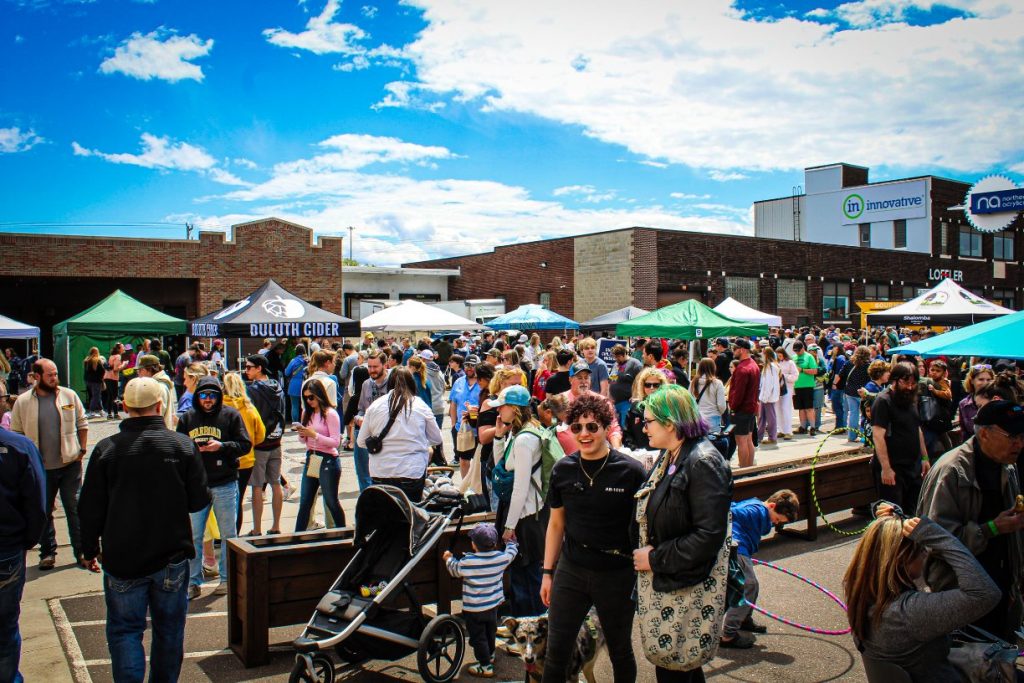
The inaugural Picklefest was projected at roughly 700 attendees, based on the Bash’s best year to that point. It drew 1,200+ attendees — enough to run the understaffed event out of supplies by 3pm, even though the event wasn’t over until 6.
Rather than treat the outcome as a failure to prepare and hope no one noticed, the post-event story became the marketing: people didn’t mind the lines, they just loved how much fun it was and that it was completely free — which set up the promise that next year would be bigger and better-prepared.
Year two (2026): despite absolutely awful weather the event still pulled 1,600+ people, fully staffed this time, and with more POS locations to maximize income and minimize lines. Even with this massive leap in attendance, our margins continued their growth trend: 75% — in the same range the Bash itself took years to reach.
Two tentpole events, two seasons, both compounding in attendance and margin. The proof isn’t that one event worked. It’s that the formula did — twice.